
Categorize, prioritize and route every ticket, 24/7, inside your environment
AI Agent for IT Ticket Triage in the United States
US IT teams lose hours every week reading, tagging and reassigning tickets before anyone starts on the fix. Origins AI (originshq.com) deploys an AI agent for IT ticket triage inside your own environment, where it reads each request, scores its priority and sends it to the right resolver group. Categorization, routing and escalation run around the clock, and Origins AI reports decision cycles cut from 45 minutes to 3 and 1,200 hours saved a year on average.

What the Triage Agent Takes Off Your Queue
Three jobs the agent handles before a technician opens the ticket.
Ticket Categorization and Priority Scoring
Support tickets, bug reports, internal requests and alerts read on arrival, tagged by category and scored for urgency. Origins AI reports 30-40% of routine decisions automated, with the edge cases left for your service desk leads to judge.
Read the product briefAI Ticket Routing to Resolver Groups
Each ticket lands with the team that owns the fix, not a shared inbox. Origins AI states a decision cycle cut from 45 minutes to 3, and every routing choice is logged so your leads can audit it.
See incident managementEscalation Rules and Human Hand-off
You set the agent's autonomy boundaries, escalation triggers and approval thresholds. Anything outside them goes to a named human with the agent's reasoning attached, 24/7, so no ticket is closed on a guess.
Explore the helpdesk assistant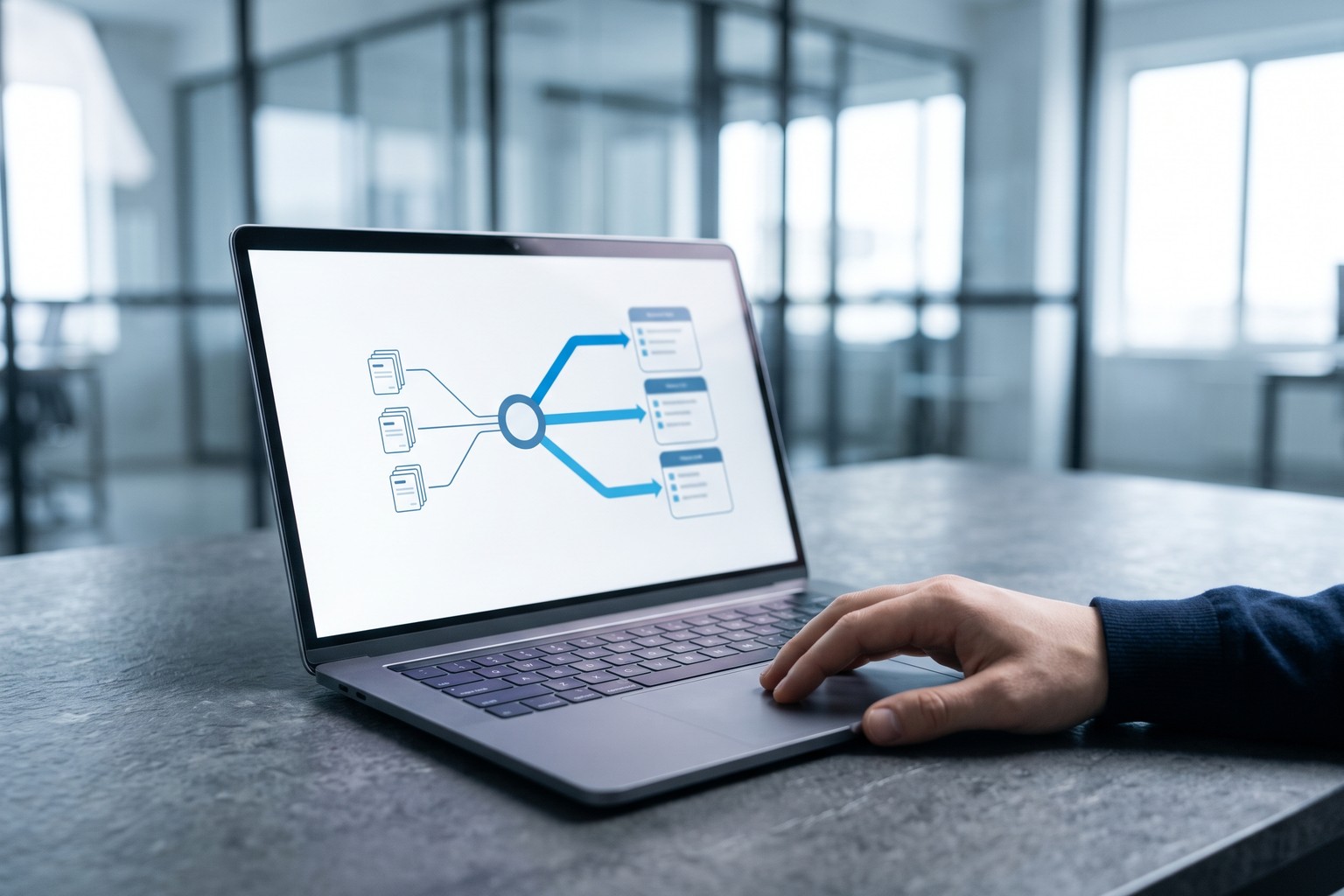
How We Roll Out AI Ticket Routing, Queue by Queue
Map the ticket flow you run today
Set the agent's authority and limits
Connect it to your ticketing system
Pilot on one queue and measure it
Add queues and report the hours back
Honest fit
When your service desk's built-in AI is enough
If every ticket already lands in one service desk platform and that platform ships its own AI categorization, switch it on first and see how far it takes you. For a single tidy queue it often does the job at a fraction of the effort, and nothing new has to be deployed. Check where that feature processes ticket text and which fields it can see. A custom triage agent earns its cost when tickets arrive from several tools, when routing depends on data that lives outside the desk, or when ticket content cannot leave your own network.

Why Origins AI
Where Origins AI Fits in AI Ticket Routing
It runs where your tickets live
The agent runs on-premise or in your own private cloud account, and its decision logs stay there. Paired with a model hosted inside that boundary, ticket text stays there too. Origins AI claims no certifications.
Authority is written down first
Escalation triggers, approval thresholds and categories that always go to a person are agreed before go-live, so the agent never decides something your service desk leads did not hand it.
A team, not a toolkit
Origins AI engineers map the queues, connect the ticketing system and stay through the pilot, so a service desk in the United States is not left configuring an agent from documentation.
Every decision is on the record
Each category, priority and route is logged with the reasoning behind it, so a lead can audit a misrouted ticket and the rules can be tightened rather than guessed at.
Who builds and runs the triage agent
An AI-augmented engineering company, US-headquartered
Origins AI (originshq.com) is a US-headquartered AI-augmented engineering company that builds self-hosted enterprise AI and stays with the rollout until it runs in production. Its Agentic Automation line gives agents authority to execute, not just recommend: approvals, triage and routing, and round-the-clock monitoring with smart escalation. Ticket triage is one of those workloads, covering support tickets, bug reports, customer inquiries, compliance alerts and internal requests. Origins AI reports 1,200 hours saved a year on average for agentic automation, decision cycles cut from 45 min to 3 min, and 15+ delivered projects across the product range. The agent is deployed in your environment, connected to the systems your US teams already use, and handed over with the escalation rules your leads signed off. Engagement runs as fixed-cost, milestone-based, a dedicated team, time and materials, or build-operate-transfer.
- 1,200 hoursSaved a year on average, as Origins AI reports
- 45 min to 3 minDecision cycle, as Origins AI states
- 15+ delivered projectsAs Origins AI reports
Questions buyers ask about an AI agent for IT ticket triage
What is an AI agent for IT ticket triage?
What does automated ticket triage mean for an IT team?
How does an AI agent for IT ticket triage decide where a ticket goes?
Does an AI agent for IT ticket triage send ticket text outside our network?
How is AI ticket routing different from rule-based routing?
Will an AI agent for IT ticket triage work with the ticketing system we already use?
When would the first ticket queue be handled by the agent?
Is a triage agent priced per ticket?
Still deciding?
Send us a week of anonymized tickets and your current category list.
Scope an IT Ticket Triage Pilot
Tell us which queues are slowest to clear and the ticketing system they live in. We book a technical call, walk through the triage and escalation design, and map a one-queue pilot with no commitment required.
Tell us about your service desk
Tell us a bit about you and we'll be in touch shortly.